
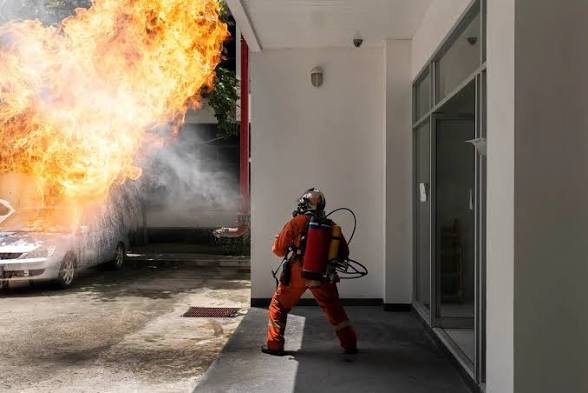
High-rise buildings bring together many people, electrical systems, elevators, kitchens, offices, apartments, storage areas, and mechanical equipment within a vertical structure. This makes fire safety especially important because an emergency on one floor can affect occupants on several other floors.
The real cost of ignoring fire safety is not limited to damaged walls, furniture, or equipment. A poorly prepared building can face serious risks to human life, business continuity, property, reputation, and long-term financial stability. For this reason, fire protection should be treated as an essential part of building management rather than an optional expense.
Pakistan’s Building Code of Pakistan – Fire Safety Provisions 2016 establishes requirements covering fire detection, alarms, evacuation, emergency systems, maintenance, and other fire-safety measures. The provisions are intended to establish reasonable levels of life safety and property protection from fire hazards.
Why Fire Safety Is Especially Important in High-Rise Buildings
High-rise buildings have characteristics that can make fire emergencies more complicated than those in smaller structures.
People may be located many floors above ground level, and smoke can potentially spread through vertical openings and building services if appropriate protection is not provided. Occupants may also be unfamiliar with emergency routes, particularly in offices, hotels, shopping buildings, and mixed-use properties.
The Building Code addresses vertical openings by requiring appropriate protection to help prevent the spread of fire, smoke, and fumes between floors and to support safe use of means of egress.
This is why high-rise fire safety needs to be planned as a complete system.
The Cost of Delaying Fire-Safety Investment
Fire-safety equipment and professional maintenance require investment, but ignoring these responsibilities can create much greater costs.
A fire can damage:
- Building structures and finishes
- Electrical and mechanical equipment
- Computers and business systems
- Furniture and fixtures
- Stock and inventory
- Important documents
- Residential belongings
- Commercial equipment
There can also be indirect costs. Businesses may be unable to operate, residents may need temporary accommodation, employees may be unable to work, and building owners may face significant repair and recovery expenses.
The financial impact can therefore continue long after the visible fire has ended.
Human Safety Must Come First
The most serious consequence of inadequate fire protection is the potential danger to people.
A building should be designed and managed so occupants receive appropriate warning and have suitable ways to reach safety. The Building Code states that where a fire itself would not provide adequate warning, fire alarm systems should be provided where necessary to notify occupants.
In a high-rise building, early warning can be particularly important because occupants may be far from the source of the fire.
No financial consideration is more important than protecting human life.
How a Fire Alarm System Supports High-Rise Safety
A fire alarm system is a central part of many high-rise fire-protection strategies. Depending on the building and system design, it may include smoke detectors, heat detectors, manual alarm points, control panels, notification appliances, monitoring functions, and emergency communication features.
The Building Code provides for fire alarm systems and automatic fire detection systems where required and refers to recognized standards for their installation.
A properly designed fire alarm system in Pakistan can provide early warning and help building occupants respond according to an approved emergency plan.
For high-rise buildings, alarm coverage is particularly important because an emergency may not be immediately visible or audible to people on other floors.
Why Alarm Maintenance Cannot Be Ignored
Installing an alarm system is not the end of fire-safety management.
A system can develop faults because of damaged components, environmental conditions, electrical problems, aging equipment, or inadequate maintenance. A detector that is not functioning correctly or a notification device that cannot be heard can reduce the effectiveness of the overall system.
Pakistan’s fire-safety provisions specifically address inspection, testing, and maintenance of fire alarm and fire detection systems.
Building owners and managers should therefore establish appropriate inspection and maintenance arrangements and keep relevant records.
Evacuation Is a Critical Part of High-Rise Fire Safety
A fire alarm only provides meaningful protection when occupants know how to respond.
The Building Code states that people should leave a building when a fire alarm is activated, except in circumstances covered by an approved evacuation plan or routine testing and maintenance.
High-rise buildings should have clear emergency procedures covering evacuation and, where applicable, relocation.
Occupants should know:
- Which exits are designated for emergency use
- Where the assembly area is located
- How alarms are communicated
- What to do if the normal route is affected
- Who is responsible for emergency coordination
People should follow the building’s approved emergency procedures and instructions from responsible authorities.
Stairways and Emergency Exits
Elevators are a normal part of high-rise buildings, but they cannot simply be treated as ordinary evacuation routes during every fire emergency.
Protected stairways and other approved means of egress are important components of high-rise fire safety. The Building Code requires means of egress to be arranged and marked so that the route to a place of safety is clearly indicated, with appropriate illumination.
Building management should ensure that emergency routes are not blocked by furniture, stored materials, equipment, or unauthorized alterations.
A beautifully maintained lobby does not compensate for an obstructed emergency route.
The Danger of Smoke
People often associate fire damage primarily with flames, but smoke can also create serious problems during a building emergency.
Smoke can reduce visibility, affect breathing, and make it difficult for occupants to identify escape routes. In high-rise buildings, controlling the movement of smoke between floors is therefore an important consideration.
The Building Code addresses protection of vertical openings and includes requirements related to smoke control and emergency systems for high-rise buildings.
Building design, compartmentation, detection, ventilation, and other systems may work together to reduce the impact of smoke.
Emergency Communication Matters
A standard alarm signal may tell occupants that an emergency exists, but high-rise buildings can also require clear instructions.
Emergency voice/alarm communication systems can provide information to occupants during an evacuation or relocation.
The Building Code’s high-rise provisions identify emergency voice/alarm communication systems as part of the emergency systems associated with high-rise buildings.
Clear communication can help reduce confusion by giving occupants information through an organized emergency system.
Fire Detection and Alarm Should Work Together
Detection and notification are closely connected but serve different functions.
Detection equipment identifies signs of a fire, while the alarm system communicates the emergency to occupants and relevant building systems.
A modern fire alarm system in Pakistan can be designed with different types of detectors and control functions depending on the building’s requirements.
For a high-rise building, the system should be designed according to the building’s layout, occupancy, risk profile, and applicable codes and standards rather than simply installing a few standalone alarms.
The Importance of Fire-Protection Systems
Fire safety in a high-rise building may involve several interconnected systems.
Depending on the building and applicable requirements, these may include:
- Fire detection
- Fire alarm systems
- Automatic sprinklers
- Standpipe or riser systems
- Fire pumps
- Emergency communication
- Emergency lighting
- Protected stairs
- Smoke-control measures
- Fire extinguishers
- Emergency power
- Fire command facilities
The Building Code’s high-rise provisions specifically identify smoke detection, fire alarms, standpipe systems, emergency voice/alarm communication, emergency responder communication, and fire command centers among high-rise emergency systems.
The exact combination depends on the building’s design and applicable requirements.
Why Multiple Safeguards Are Necessary
Fire protection should never depend on one piece of equipment.
The Building Code emphasizes that safety should not depend on a single safeguard. Additional safeguards should be considered where one measure may become ineffective.
For example, a high-rise building may rely on a combination of detection, alarms, compartmentation, protected escape routes, suppression, emergency communication, and trained building personnel.
This layered approach provides greater resilience than depending on one system.
The Cost of Poor Maintenance
Neglected maintenance can gradually weaken a building’s fire-safety arrangements.
Examples can include:
- Faulty detectors
- Damaged alarm devices
- Inoperable emergency lighting
- Blocked exits
- Poorly maintained fire doors
- Defective pumps
- Obstructed firefighting equipment
- Outdated emergency plans
- Unchecked electrical systems
These problems may not be obvious during normal daily operations.
Regular inspections can identify problems while they are still manageable.
Fire Drills Prepare Occupants
A written emergency plan is useful, but occupants also need to understand how to respond.
Fire and evacuation drills allow building management to evaluate whether procedures work in practice.
The Building Code provides for emergency egress and relocation drills, including requirements concerning drill frequency, conditions, predetermined relocation areas, and written records.
Drills should be organized safely and appropriately. They should not involve creating real fire conditions or placing occupants in danger.
The Role of Building Management
Fire safety is not solely the responsibility of a security guard or maintenance worker.
Building management has an important role in ensuring that:
- Fire-protection systems are maintained
- Emergency exits remain accessible
- Alarm faults are addressed
- Fire-safety records are maintained
- Staff understand emergency procedures
- Occupants receive appropriate information
- Drills are organized where required
- Changes to the building are reviewed
The Building Code also includes maintenance, inspection, and testing requirements for fire-protection systems.
Renovations Can Create New Risks
High-rise buildings are frequently renovated, remodeled, or repurposed.
Changing an office into a restaurant, adding partitions, modifying electrical systems, or changing the use of a floor can alter the building’s fire-safety requirements.
The Building Code addresses changes of occupancy and requires the building to meet applicable provisions for the proposed use.
Fire-protection systems should therefore be reviewed whenever major changes are made.
Construction and Temporary Fire Risks
Fire safety can be especially important while a high-rise building is under construction or major renovation.
The Building Code includes specific fire-protection measures for high-rise buildings during construction and states that required fire-protection measures should be maintained in good working condition.
Temporary electrical systems, construction materials, unfinished escape routes, and changing building layouts can introduce additional risks.
Fire safety should therefore be considered throughout the construction process, not only after the building is completed.
Business Continuity and Financial Loss
For commercial high-rise buildings, fire damage can interrupt business for days, weeks, or longer.
Even areas that are not directly affected by flames may become unavailable because of smoke, water used during firefighting, damaged electrical systems, or safety inspections.
Possible consequences include:
- Lost working hours
- Interrupted customer services
- Damaged equipment
- Temporary relocation
- Loss of stock
- Data and document recovery
- Repair expenses
- Increased operational costs
This makes fire prevention and preparedness an important part of business continuity planning.
Reputation Can Also Be Affected
A fire incident can affect how tenants, customers, employees, investors, and the wider community view a property.
For a commercial building, confidence in safety can be important to attracting and retaining tenants.
Good fire-safety management demonstrates that the property owner or management takes occupant safety seriously.
Professional Fire-Safety Assessment
High-rise buildings are technically complex. Their fire-safety requirements can depend on height, occupancy, floor layout, construction, building services, emergency systems, and local requirements.
Professional assessment can help identify weaknesses in existing systems and determine whether improvements are needed.
This can include reviewing:
- Fire detection coverage
- Alarm system functionality
- Emergency communication
- Fire pumps and water supplies
- Protected escape routes
- Fire doors
- Emergency lighting
- Fire extinguishers
- Suppression systems
- Maintenance records
- Evacuation procedures
The goal is not simply to install more equipment. It is to create an integrated safety strategy appropriate to the building.
The Role of Flame Defender
Flame Defender provides fire-protection services in Pakistan, including fire alarm installation, testing, maintenance, and upgrades. Its published fire-alarm services include conventional and addressable systems, smoke detection, heat detection, control panels, and notification equipment. (flame-defender.com)
The company also describes fire-suppression services that include site surveys, risk assessment, design, installation, commissioning, inspection, testing, and preventive maintenance. (flame-defender.com)
For a high-rise building, professional assessment is particularly valuable because the correct protection strategy depends on the building’s individual characteristics.
Why Ignoring Small Problems Can Become Expensive
Fire-safety failures do not always begin as major problems.
A blocked exit may seem like a minor housekeeping issue. A detector fault may appear to be a routine maintenance problem. A damaged fire door may look insignificant. An overdue inspection may seem easy to postpone.
However, each unresolved issue can reduce the overall reliability of the building’s protection.
Addressing problems early is generally more practical than waiting until an emergency exposes multiple weaknesses at once.
Keeping Fire-Safety Records
Documentation is an important part of responsible building management.
Records can include:
- Alarm inspections
- Detector testing
- Fire-pump testing
- Extinguisher servicing
- Emergency-light testing
- Fire drills
- Repairs
- Risk assessments
- System faults
- Corrective actions
The Building Code includes provisions concerning records for maintenance, inspections, testing, and drills.
Good records help management track what has been done and identify what still needs attention.
A Long-Term Approach to High-Rise Fire Safety
Fire safety should be treated as a continuous process rather than a one-time installation.
A building’s risks can change because of:
- New tenants
- Renovations
- Changes in occupancy
- New equipment
- Increased electrical loads
- Altered floor layouts
- Aging systems
- Changes in emergency procedures
Regular review helps ensure that fire-protection arrangements remain appropriate.
Final Thoughts
The real cost of ignoring fire safety in high-rise buildings can extend far beyond the price of damaged property. The greatest concern is the safety of people, followed by potential disruption to homes, businesses, services, and building operations.
A properly designed fire alarm system in Pakistan can provide an important early warning, but high-rise protection requires much more than an alarm. Detection, notification, protected escape routes, suppression systems, emergency communication, maintenance, drills, and responsible building management all have important roles.
The Building Code of Pakistan provides a framework for fire and life safety, including requirements and principles concerning alarms, evacuation, emergency systems, maintenance, and multiple safeguards.
Investing in fire safety is therefore not simply an expense. It is an investment in human safety, property protection, business continuity, and long-term building reliability.
FAQs
1. Why is fire safety particularly important in high-rise buildings?
High-rise buildings contain many occupants across multiple floors, making evacuation and emergency communication more complex. Fire, smoke, and other hazards can also affect areas away from where an incident begins.
2. Is a fire alarm system required in high-rise buildings in Pakistan?
The Building Code of Pakistan’s fire-safety provisions specifically addresses fire alarm and detection systems for high-rise buildings. The applicable system and requirements should be determined according to the building’s characteristics and the relevant authority and standards.
3. Why does a high-rise building need regular fire-safety maintenance?
Regular inspection and testing can identify faults in alarms, detectors, emergency systems, and other protective equipment before an emergency occurs. The Building Code includes provisions for inspection, testing, and maintenance of fire-protection systems.
4. Are fire drills important in high-rise buildings?
Yes. Drills help occupants and building personnel become familiar with emergency procedures and can reveal weaknesses in evacuation arrangements. Pakistan’s fire-safety provisions include requirements concerning emergency egress and relocation drills where applicable.
5. Can a fire alarm alone protect a high-rise building?
No. An alarm provides an important warning function, but effective high-rise fire safety requires multiple safeguards. Depending on the building, these can include detection, alarms, suppression systems, protected escape routes, emergency communication, emergency power, maintenance, and evacuation planning.